


ONLINE CASINOS WITH BLACKJACK GAMES
Blackjack is widely offered, though the range of tables varies from one casino site to another. Some online casinos include virtual tables with free-play modes; others feature live-dealer versions of the familiar game. A site may offer both formats, so the available selection is one detail to compare.
The casino listings below represent the selections for broad blackjack variety:
UK Blackjack Casinos
100% up to £100
PlayNew UK customers. Make first-time deposit of £10 +, stake it on selected Slots within 48 hours to get 100% bonus equal to your deposit, up to £100. Paypal/paysafecard/Trustly deposits excluded. Claim bonus via pop-up/My Account within 48 hours of deposit. Bonus must be wagered 10x on selected Slots within 90 days of credit. Wagering can only be completed using bonus funds (and only once main cash balance is £0). Winnings capped at £100. One per player.


50 Wager Free Spins + Cashback on Every Bet
Play18+. First deposit only. 50 Free Spins on Big Bass Bonanza slot. Free Spin valued at £0.10. Excludes players in N.I. Irregular play may lead to removal of rewards. OJO’s Rewards and Game Play policy applies.
Canada Blackjack Casinos

50 Wager Free Spins + Cashback on Every Bet
Play18+. First deposit only. 50 Free Spins on Big Bass Bonanza slot. Free Spin valued at £0.10. Excludes players in N.I. Irregular play may lead to removal of rewards. OJO’s Rewards and Game Play policy applies.

New Zealand Blackjack Casinos



Australia Blackjack Casinos



South Africa Blackjack Casinos



Other Blackjack Casinos Accepting Players Worldwide



Crypto-Friendly Blackjack Casinos



LIVE-DEALER ONLINE BLACKJACK GAMES
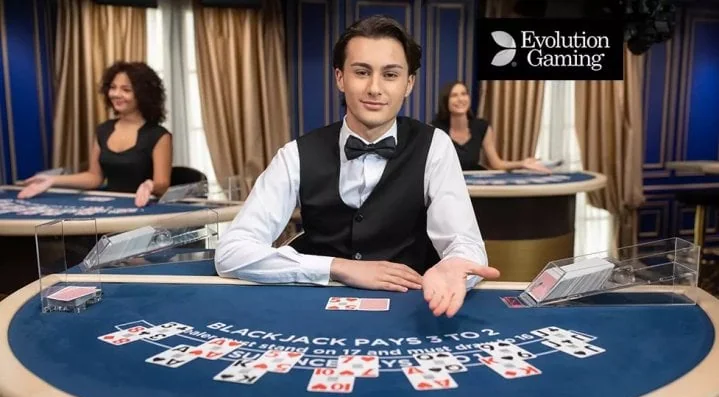
Free blackjack can help newcomers practise the rules and decisions, but demo chips cannot produce real-money winnings. The source review favoured live-dealer blackjack for its streamed tables and choice of games, while also noting that real-money play carries risk and does not guarantee profit. Players can also find virtual tables that accept wagers.
The original review highlighted these live formats for players considering online blackjack:
ONE Blackjack (Pragmatic Play)
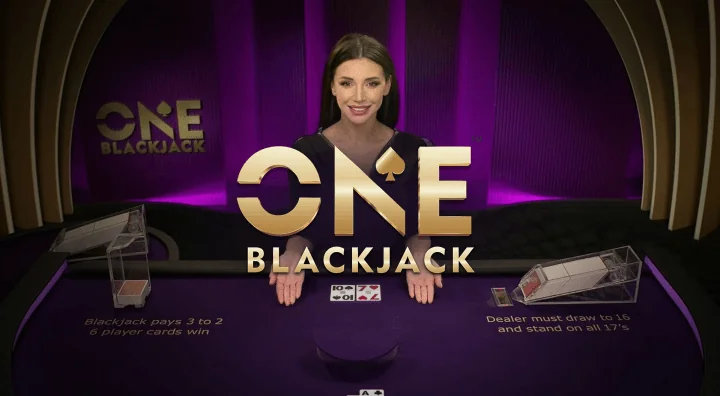
ONE Blackjack from Pragmatic Play Live seats players at a shared game: everyone receives the same hand, then makes individual decisions. The format is designed to avoid waiting in a queue and can deal more hands per hour than a conventional seat. The game also includes side bets with potential payouts of up to 2,000x the stake.
Lightning Blackjack (Evolution)
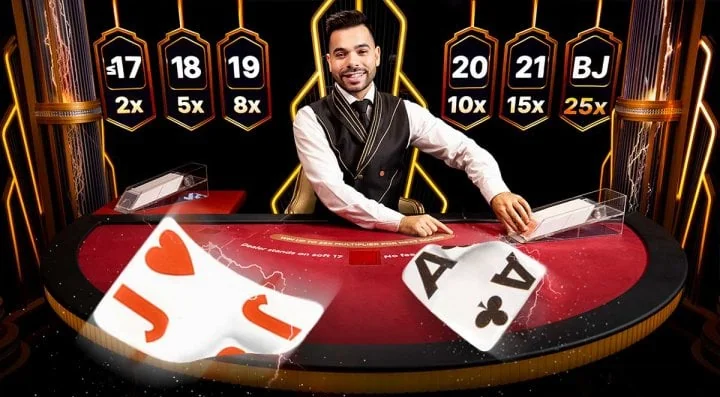
Evolution's Lightning Blackjack adds randomly assigned multipliers. Paying the 'Lightning' fee means a winning hand receives a multiplier between 2x and 25x.
Infinite Blackjack (Evolution)

Evolution's Infinite Blackjack, like ONE Blackjack from Pragmatic Play, accommodates unlimited seats and offers side bets. These bets can look appealing, although side bets should be assessed separately from the main game's rules and odds.
Other live blackjack titles named in the original review include:
- Free Bet Blackjack (Evolution)
- Speed Blackjack (Pragmatic Play)
- Super Stake Blackjack (Stakelogic Live)
- Quantum Blackjack (Playtech)
- Blackjack Party (Evolution)
FREE-PLAY AND REAL-MONEY BLACKJACK COMPARED
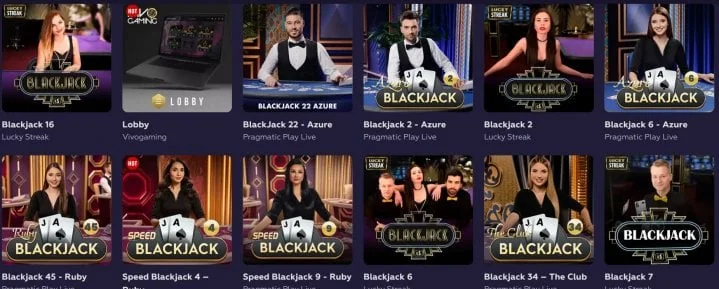
In a demo game, the chips are for practice and do not have cash value. The source review describes demo blackjack as using the same odds and rules as the corresponding real-money game, making it a way to rehearse decisions and learn basic strategy charts. A chart can help players make mathematically informed choices, but it does not ensure a win or prevent losses.
Many virtual blackjack tables provide a demo mode, while live-dealer tables commonly do not. The source review names Pragmatic Play Live, Evolution, Ezugi, Vivo Gaming, and Playtech Live as providers whose games lacked free demo modes in that review. It identifies TVBet as an exception, with live blackjack tables playable in demo mode.
BLACKJACK EXPLAINED
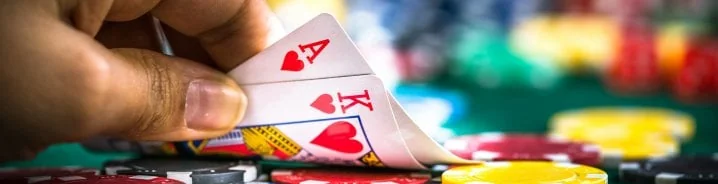
Blackjack is a casino card game played between a dealer and at least one player. It is found at land-based casino tables and online, where options include virtual games and live-dealer streams for desktop or mobile devices.
The aim is to finish with a hand that beats the dealer without exceeding 21. A standard win pays even money, while a two-card total of 21—a blackjack—may pay 3/2 of the wager under the rules described here.
Depending on the table, a player may wager from one seat or several. The dealer manages a shoe containing 1 to 8 decks, and each betting round begins when players place their wagers. Players then choose actions such as hit or stand; some tables also offer double, split, or surrender. A hand ends when the player stands or goes bust.
Online blackjack comes in multiple rule sets, and those rules affect the house edge and RTP (Return to Player). The source material gives average figures of 0.05% house edge and 95.5% RTP, while specifying that the stated percentage depends on using the correct ‘Basic Blackjack Strategy’. These figures should be read in the context of the game and rules being discussed.
HOW A HAND OF ONLINE BLACKJACK PROCEEDS
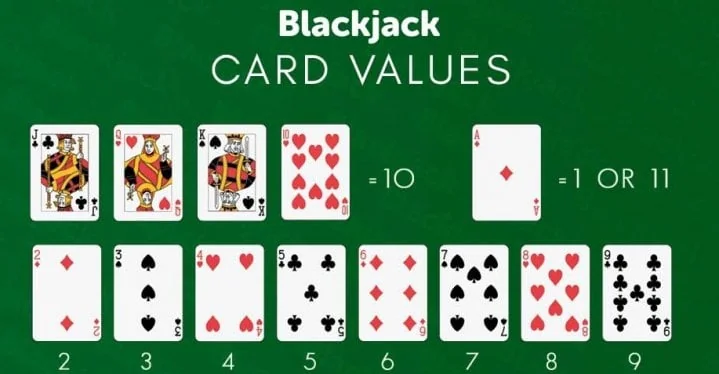
If the rules are familiar, the sequence may be easy to recall. For anyone learning the game or looking for a refresher, a typical hand moves through these stages:
- Receive the opening cards: The player and dealer each get two cards. The player's cards are usually face-up; the dealer shows one card and keeps the other face-down.
- Work out the total: Add the card values together. Number cards count at face value, Kings, Queens, and Jacks count as 10, and an Ace can count as 1 or 11.
- Choose hit or stand: A hit adds another card in pursuit of 21; standing keeps the current total. The decision depends on the hand and strategy, as well as the dealer's visible card.
- Dealer turns over the hidden card: The dealer reveals the face-down card at the point required by the table rules.
- Dealer completes the hand: The dealer follows fixed table rules and usually hits until reaching 17 or more. Some variants set different requirements.
- Decide who wins: Compare your final hand with the dealer's. You win if your total is nearer to 21 without exceeding it, or if the dealer goes over 21 and busts. Matching totals result in a push, meaning a tie.
- Settle the wager: A winning hand receives its payout; after a loss, the wager goes to the casino. A push returns the stake.
- Begin another round: To continue, set a wager for the next hand and play through the sequence again.
These steps outline the basics, but specific play depends on the variation. Some tables include side bets; certain live games may add random multipliers or bonus rounds.
For additional detail, see GCCans' 'How to Play Blackjack: Rules and Tips' and Blackjack Odds, Probabilities and House Edge' guides. The 'Winning with Blackjack Strategies: Basic Strategy Charts and Betting' overview explains how basic strategy is used.
A SHORT HISTORY OF BLACKJACK
Blackjack's history stretches back centuries, preceding today's online titles that can be accessed through the Web.
Blackjack traces its roots to “twenty-one,” a card game believed to have emerged sometime in the 17th century. Miguel de Cervantes, the famous Spanish author, is credited in the source account with the first written mention of this game of luck during the 17th century. That reference alone does not show how long people may have played it before it was recorded.
By the 18th century, a version known as “Vingt-et-un,” or “twenty-one,” had appeared in French casinos and grown popular.
The name blackjack is linked to a former bonus: a player holding a black (spade or club) ‘royal Jack’ alongside the ace of spades could receive a special payout. The rule later disappeared, while the game's name remained.
Modern blackjack tables use a range of rules, some more favourable to players than others. The source review advises avoiding games that pay 6-5 for blackjack and points to Free Bet Blackjack, which offers free double and split bets, as an example of a different format.
PLAYING CLASSIC ONLINE BLACKJACK
The goal in classic blackjack is the same at an online table and a land-based casino: finish with a higher total than the dealer while keeping your hand at or below 21. You also win if your hand remains active and the dealer exceeds 21, which is called a bust.
Suit and colour do not alter card points. A 2 of spades is worth 2 points, and the 2 of hearts carries that same 2-point value. Face cards count as 10 points, unlike an Ace, which may count as 11 points or 1 point depending on the other cards in your hand. Pair an Ace with any 10-point card and the hand is an automatic win, known as a "natural" blackjack.
A standard round begins with a wager and two cards for the player. Depending on the game, the dealer receives one face-up card or two cards, one visible and one hidden.
After the deal, the player can hit or stand. Hitting adds a card to the hand; if the total rises above 21, the player busts and loses. Standing ends the player's turn, leaving the dealer to try to match or beat the total—or go bust.
If the dealer's visible card is worth 10 points, the dealer may have blackjack. Once the player has stood, a dealer blackjack wins unless the player also has blackjack. When both have 21, the result is a draw and the wager is returned.
SPLITTING A BLACKJACK HAND
A split separates a pair into two hands, each beginning with 1 card. If you have two aces, for example, you can make them the starting cards for separate hands; the new hand requires an additional bet matching your original bet. The rules of the blackjack variant determine what follows. Some allow just one more card to each split hand, while others let you play both hands as usual. Split limits vary too: certain versions permit multiple splits, whereas others allow only one.
DOUBLING DOWN IN ONLINE BLACKJACK
Doubling-down rules vary by table. A game may allow it on any total or restrict it to 9, 10 or 11. The player adds an amount equal to the original wager, receives one more card, and then must stand.
Whether doubling is allowed after a split is another rule to check. NDAS means 'no doubles after split'; DAS means 'Doubles after split'.
INSURANCE IN BLACKJACK
If the dealer's visible card is an ace, you may be able to place an insurance bet equal to 50% of your original bet. Should the dealer's 2 cards form 21 blackjack, the insurance wager is paid back with an additional 50%, covering the loss on your main bet. The source calls insurance the 'fools' bet' in blackjack because the dealer is more likely to miss a 21-blackjack hand than to have one.
THE SURRENDER OPTION
Some blackjack variants let a player surrender after seeing the cards, returning 50% of the wager. Early and late surrender differ in when the option remains available. Under late surrender, the player cannot surrender if the dealer has a natural blackjack.
ONLINE BLACKJACK FORMATS AND VARIANTS
Online casinos offer blackjack as virtual games driven by an RNG (Random Number Generator) or as live-dealer tables. In an RNG game, software generates the cards and there is no time limit between hands. Many virtual titles include a free demo mode, whereas live games may not.
Live blackjack uses a human dealer who shuffles and deals physical cards. Rather than computer-generated results, players watch the deal through a webcam stream, with a timer of around 20 to 30 seconds between betting rounds. The format aims to recreate a casino table on mobile or desktop. Players place virtual chips on the felt of a real table in a purpose-built live casino studio.
EUROPEAN AND AMERICAN BLACKJACK RULES
In European blackjack, the dealer initially takes one card and places it face-up. The dealer draws a second card only after players have completed their hands.
In American-style blackjack, the dealer starts with two cards: one face-up and one face-down. When the visible card is an ace, the dealer checks the hidden card. A value of 10 completes blackjack and is revealed; otherwise, play continues and the hidden card is shown at the end of the round.
RNG BLACKJACK VARIATIONS
Blackjack variants adjust rules for both dealers and players. The examples below illustrate some available table formats. Since casino rules can differ, check a game's terms before choosing a table.
Blackjack Switch
Blackjack Switch involves playing two hands at once, with the option to exchange the second card between them. If the dealer totals 22, the result is a draw and the player's bet is returned; in classic blackjack, the player would win when the dealer busts. This variant pays 1:1 for blackjack instead of the standard 3:2 described here.
Vegas Strip
Vegas Strip uses four decks. Players may split a pair of aces once and can double down on any two cards. Splitting, however, means the player loses the insurance bet.
After splitting, doubling is allowed only when the split was a pair of aces. A total of 21 on a split hand does not count as blackjack. Split aces receive one additional card each, with no further hit available.
Double Exposure Blackjack
In Double Exposure Blackjack, both of the dealer's cards are visible, giving players more information. Other rules offset that advantage: ties go to the dealer, a natural blackjack pays only 1:1, and players may split only once.
Perfect Pairs
Perfect Pairs follows standard blackjack rules and adds an optional side bet on the opening two cards being a pair. The payout is higher when the pair shares a colour, and higher again when both cards have the same suit.
BLACKJACK STRATEGY, RULES AND PRACTICAL TIPS
The core blackjack rules are easy to learn, but making choices at the table takes practice. This section introduces the strategy concepts players use when considering their next action.
UNDERSTANDING BASIC BLACKJACK STRATEGY
Blackjack calls for the same bankroll management and wager-sizing discipline as other casino games. It also allows strategic choices that can reduce the house edge when played according to the right basic strategy. The source review cites a 0.05% house edge and 99.5% as a possible long-run return figure, contingent on perfect basic strategy; such figures depend on the table rules and correct play. Strategy improves decision quality but cannot guarantee profit.
Basic strategy charts set out whether to surrender, hit, stand, or split, based on the player's total and the dealer's face-up card. The recommended choices are derived mathematically to give the best available chance under a particular ruleset. Following the matching chart is a way to play consistently with those calculations.
One chart does not fit every blackjack game. Although the hand sequence is familiar across tables, casinos can set different rules. The chart selection depends on details such as:
- the number of decks in the shoe
- whether the dealer hits or stands on soft 17 (S17 Vs. H17)
- whether doubling after a split is allowed (NDAS or DAS)
See GCCans' blackjack strategy charts article for more on choosing and using a chart.
CARD COUNTING IN BLACKJACK
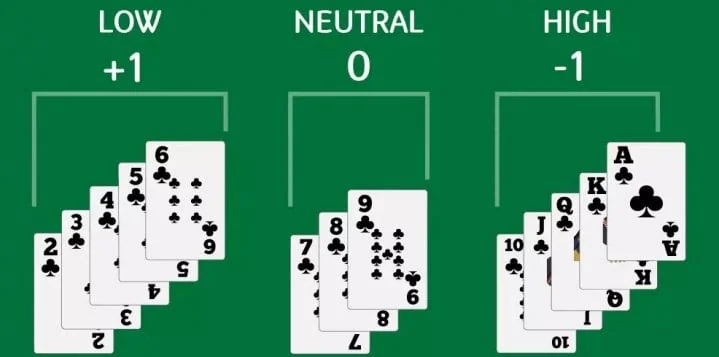
The source review argues that Blackjack card counting is ineffective in both online and land-based casinos. Card counting estimates how many ten-value cards remain and relies on a shoe that is not frequently shuffled; the review says casino dealers shuffle regularly to frustrate this method. On virtual RNG tables, a 'constant shuffle' mode prevents tracking cards in a persistent deck.
ONLINE BLACKJACK QUESTIONS
What happens in a blackjack game?
At a blackjack table, a dealer plays with a shoe that can hold between 1 to 8 decks. You receive two cards, which are compared with the dealer's hand. You can keep your two cards or 'hit' to take more, aiming for a total of 21. The goal is to finish above the dealer without going over 21.
How can I play blackjack online?
Start by learning the value of each card and what the available actions mean: stand, hit, double, split, or surrender. You can then practise applying those choices in free-play games or wager at a real-money table, where your results may vary.
How can a player improve their blackjack decisions?
Blackjack outcomes depend heavily on chance, though player decisions also matter. The source review gives the house edge as 08% to 0.5%, and says bankroll management, wager sizing, and the correct basic strategy chart can help players make informed choices. None of these techniques guarantees a winning session or changes the uncertainty of individual hands.
Is free online blackjack available?
Many virtual RNG blackjack tables have demo modes that use play money. Live-dealer games generally lack a demo mode, with TVBet blackjack tables as an exception.
What payouts do blackjack hands receive?
A standard winning hand pays even money at 1:1. A tie with the dealer is a push, returning the wager, while a natural blackjack pays 3:2 under the rules described. Insurance pays 2:1, though the source review advises against this bet.
Can people play blackjack online legally?
Legality depends on the laws that apply where a player is located. This source material does not establish whether any particular online casino or blackjack service is authorized in a given place. Free games that do not involve real-money wagers are treated differently in many jurisdictions, but local rules still matter.
Does blackjack involve skill?
Blackjack outcomes are governed by chance, but players choose how to act on their cards and the dealer's visible card. Basic strategy identifies the mathematically preferred decision for a given situation and can improve the player's odds relative to other choices. It cannot remove chance or ensure a win.